Landscape Lighting for Walkways, Driveways and Patios: Where the Light Goes
The best lighting layouts solve footing first and then show off the property.
October 14, 2026 · 4 min read
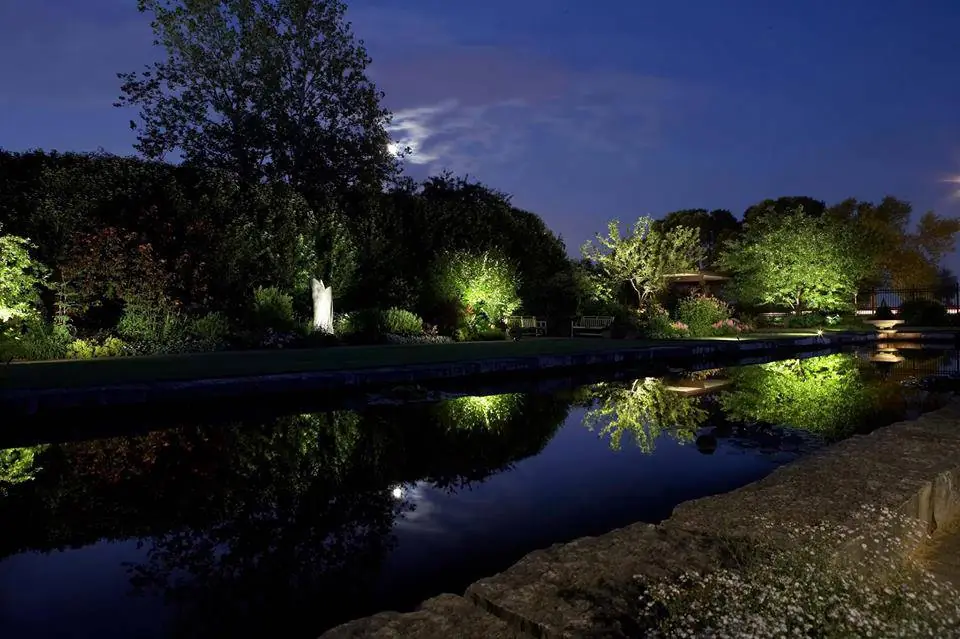
Landscape lighting does two jobs at once. It helps people see where they're stepping, and it shows off the property after dark. The best layouts handle the first job before they start on the second. A beautiful glow doesn't help if a guest still can't see the edge of a step.
Here is how to think about placement along walkways, driveways and patios in Northern Michigan, where the nights come early for much of the year.
Start with footing
Walk your property at dusk and note every place where a step, slope or change in surface could trip someone. Stairs, landings, the spot where a walkway meets the driveway and the edge of a patio come first. Those are the places a guest slows down, and they're where light earns its keep.
Light for footing is low and even. The goal is to see the path surface and its edges, not to blind the person walking. Spacing matters more than brightness. A series of gentle pools of light that overlap works better than a few bright spots with dark gaps between them.
Steps need light on the tread or the riser. A fixture tucked in beside the stair, or one that washes the face of each step, shows where one step ends and the next begins. Shadow across a stair is the usual cause of a missed step.
Walkways
- Place fixtures along one or both sides of the path, staggered if the path is wide.
- Keep them near the edge so the light falls across the walking surface.
- Shield the lamp so guests don't look straight into it as they approach.
- Light changes in direction and grade, where people slow down.
- Don't over-light. Dim and even beats bright and patchy.
Snow matters here. In Northern Michigan, a drift can cover a low fixture and a plow or shovel can bury a path edge. Think about fixture height and about where cleared snow ends up before you decide where each light goes.
Driveways
A driveway has two audiences: drivers pulling in at night and people walking from the car to the door. Mark the entry and any curve so drivers can see where the pavement ends. Near the garage and the front walk, add light for people on foot.
Keep fixtures out of the path of tires and plow blades. Setting them back in beds beside the drive, or at the edge of the lawn, protects them and keeps the edge visible. Think about where the plow pushes snow, and keep light and wire clear of that line.
Watch for glare. A fixture that points toward the road shines into the eyes of drivers and neighbors. Aim light down and across the surface, and shield it from the street side.
Patios
Patios are about comfort. People sit, talk and eat there, so the light should be soft, warm and free of glare. Fixtures at the perimeter, in nearby planting beds or on a wall behind the seating create an even glow. A bright overhead floodlight flattens faces and makes guests squint.
Think about the transitions as well. The path from the patio to the yard, the steps down and the door back inside all need light. A patio that glows while its edges drop into darkness makes people hesitate on the way out.
Then light a few features
Once footing is covered, pick a few features to show off: a specimen tree, a stone wall, a bed of shrubs or a stretch of water. Water is a good subject because it reflects light and doubles the effect. Lighting a feature from the side or from below gives it depth, while a flat wash from the front tends to make it look flat.
Less is more. Two or three features lit well make a stronger impression than every plant in the yard lit evenly. The eye needs dark areas to read the lit ones.
Before anyone digs, it helps to settle a few questions on paper.
- Where do people actually walk, as opposed to where the path was drawn?
- Where does snow get piled or plowed?
- Which two or three features deserve attention?
- Where can the power source be placed so it's protected and reachable?
- What does the view look like from inside the house at night?
Lighting and sprinklers share the ground
Lighting and irrigation live in the same beds and lawn. Trenches for lighting wire can cross sprinkler pipe, and a spray head can soak a fixture every morning. Planning both together avoids cut lines and lights that are watered more than the plants. A company that handles both can lay them out so they stay out of each other's way.
Rainmaker Irrigation designs and installs landscape lighting for walkways, driveways and patios, alongside its sprinkler work, and has been locally owned and operated in Petoskey since 1987. To talk through a lighting layout, call (231) 348-5477 for a free estimate.
Rainmaker Irrigation, (231) 348-5477
Call (231) 348-5477More articles
Why Northern Michigan Sprinkler Systems Get Blown Out Every Fall
The fall blow-out is the one sprinkler visit you can't skip, and here is exactly why.
What a Spring Sprinkler Start-Up Checks Before the First Watering
The first watering of the season is when a system tells you what winter did to it.